
Government Contracting & Operational Improvement Consulting
Understand the Problem Before Investing in the Solution
McKinley Davis helps government agencies, prime contractors, and healthcare organizations gain insight into their operations, identify opportunities for improvement, and implement sustainable change through business process improvement and operational consulting.
Why Operational Improvements Often Fall Short
Many organizations recognize opportunities to improve efficiency, strengthen performance, or streamline operations. However, improvement efforts often stall when the underlying causes of operational challenges remain unclear.
Common challenges include inconsistent processes across teams, manual workarounds that create delays, overreliance on key personnel, limited visibility into how processes are actually performed, and competing priorities that make improvement efforts difficult to sustain.
Before investing in new technology, process redesign, or organizational change initiatives, organizations need a clear understanding of how their operations function today and where opportunities for improvement exist.
Why McKinley Davis
Rather than applying a one-size-fits-all methodology, we focus on understanding how processes, systems, and people interact within the organization.
This approach helps leaders make informed decisions, prioritize improvements, and implement solutions that are practical, sustainable, and aligned with organizational goals.
Many organizations discover that challenges they assumed were isolated issues are actually symptoms of broader operational constraints. Gaining that insight often creates the clarity needed to move forward with confidence.
How We Help

Understand Current Operations
Gain insight into how processes, systems, and responsibilities function across the organization through operational assessments, workflow analysis, and process discovery.
Identify Improvement Opportunities
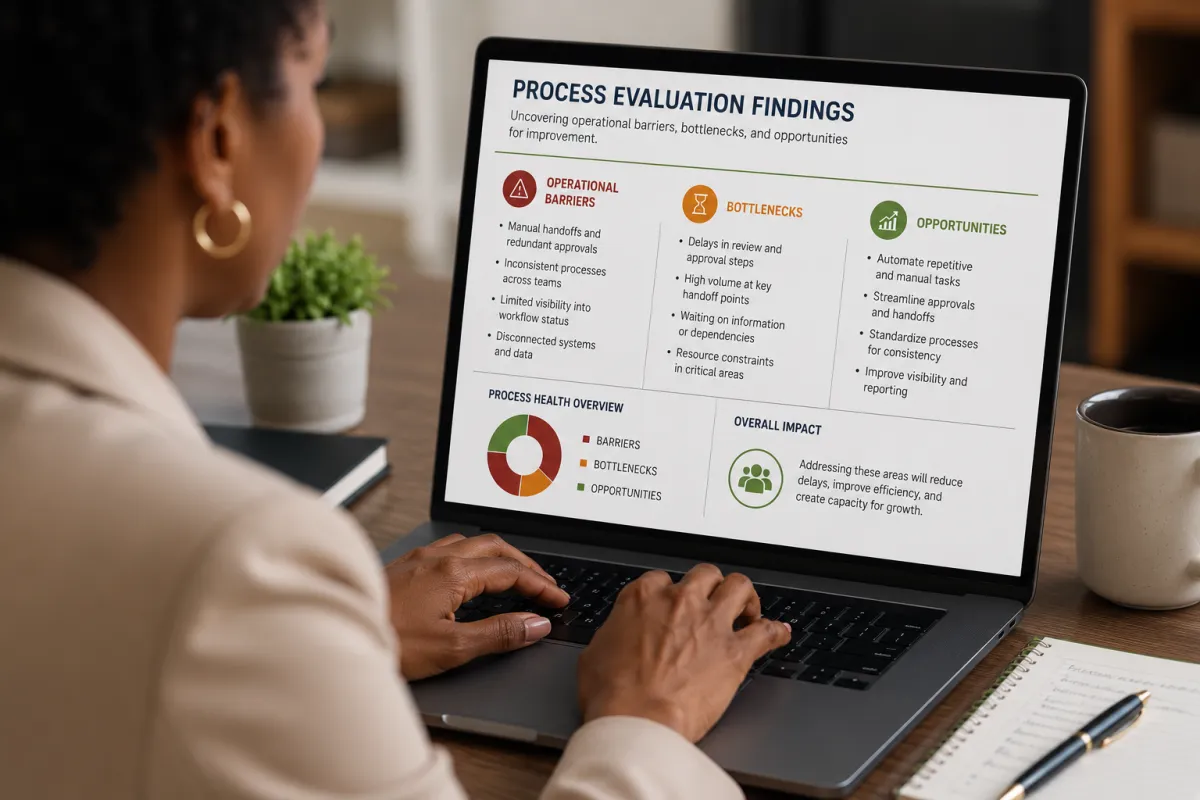
Uncover operational barriers, bottlenecks, and opportunities for improvement through process evaluation and root-cause analysis.
Plan for Improvement
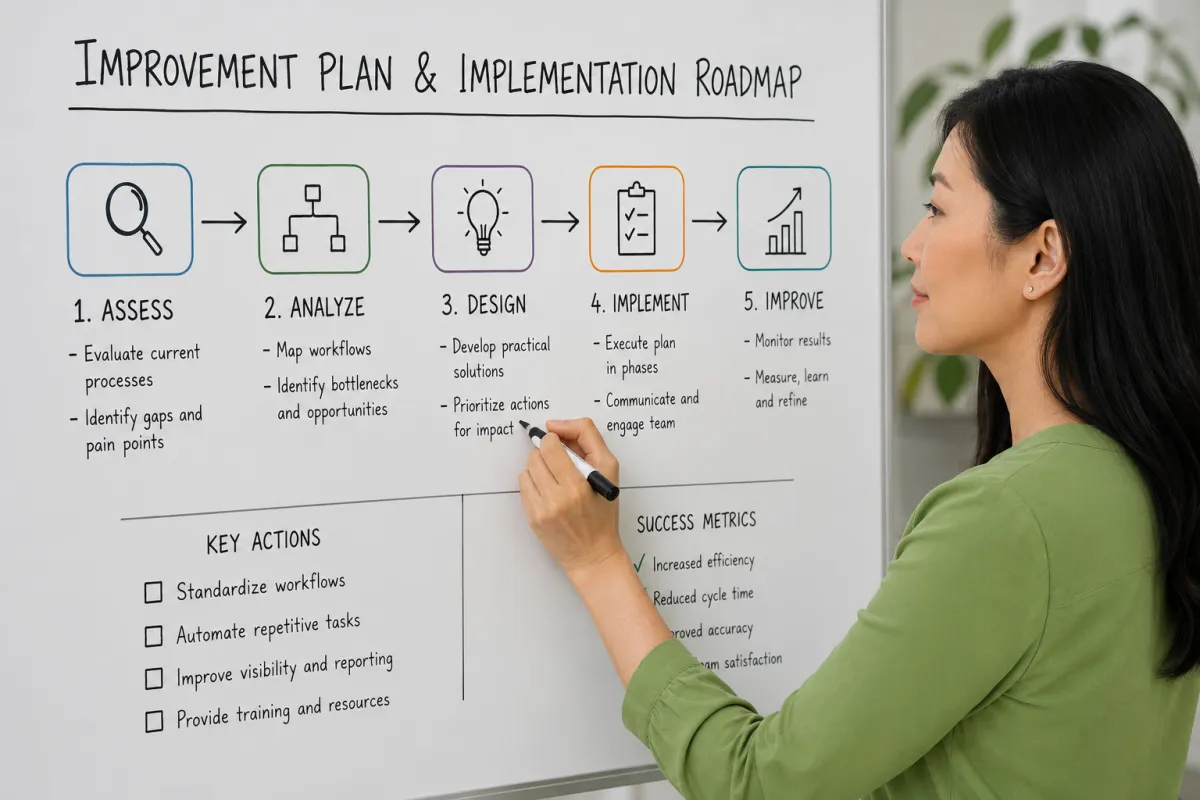
Develop practical improvement plans and implementation roadmaps aligned with organizational goals, priorities, and capacity.
Implement Operational Improvements
Support operational improvement initiatives that strengthen efficiency, performance, and long-term effectiveness.


About Us
McKinley Davis is an MBE-certified business process improvement and operational consulting firm that helps government agencies, healthcare organizations, and prime contractors improve efficiency, strengthen performance, and address operational challenges.
Our firm specializes in helping organizations gain insight into their operations, identify opportunities for improvement, and develop practical solutions aligned with their goals, resources, and operational realities.
By understanding the underlying causes of operational challenges before recommending solutions, McKinley Davis helps organizations make informed decisions and achieve sustainable results.
Selected Projects
The RLB Leadership Academy
Program Operations & Process Improvement
Supported the development and improvement of a leadership development program through workflow evaluation, CRM automation, and process improvement.
Key Outcomes
Replaced manual tracking and spreadsheet-based processes with CRM workflows.
Improved participant engagement and stakeholder communications.
Strengthened program administration through workflow standardization and process improvements.
HMSHost
Operational Process Improvement
& Stakeholder Coordination
Improved operational processes and stakeholder coordination within a high-volume airport concessions environment.
Key Outcomes
Streamlined customer complaint resolution processes, reducing resolution times from 7–10 days to 2–3 days.
Improved catering coordination and billing processes, reducing administrative effort and processing errors.
Developed centralized tracking systems that improved communication, coordination, and operational efficiency across multiple stakeholder groups.
What Clients Say
"Working with Natasha was truly transformative for The RLB Leadership Academy. She brought a rare combination of strategic insight and operational excellence that helped us expand from one leadership development offering to three distinct program components. Her ability to design efficient, scalable systems improved participant engagement, strengthened program administration, and reduced the manual workload on our Program Coordinator. Natasha's work elevated both our operational performance and the overall participant experience."

Ready to Explore
Improvement Opportunities?
Whether you're evaluating operational challenges, planning an improvement initiative, or seeking greater visibility into how processes and systems function across your organization, McKinley Davis can help you identify opportunities, clarify priorities, and develop practical solutions that support long-term performance.
FAQs
What types of organizations do you work with?
McKinley Davis works with government agencies, prime contractors, healthcare organizations, leadership development organizations, and other entities seeking to improve operational performance, strengthen processes, and support continuous improvement initiatives.
How is McKinley Davis different from traditional process improvement consultants?
Many process improvement approaches begin with a methodology, technology solution, or implementation plan. McKinley Davis begins by understanding how operations function today, identifying factors contributing to challenges, and clarifying improvement priorities before recommending solutions. This approach helps organizations make informed decisions and implement improvements aligned with their goals, resources, and operational realities.
Do you provide implementation support?
Yes. Depending on the organization's needs and scope of work, McKinley Davis can support operational improvement initiatives, implementation planning, process redesign efforts, and continuous improvement activities.
Do you need Six Sigma certification to improve operations?
Not necessarily. While formal process improvement methodologies can be valuable in certain environments, effective operational improvement begins with understanding how processes, roles, and responsibilities function across an organization.
Charlotte, North Carolina
Serving Clients Nationwide


